What Independent Travelers to Albania's Riviera Consistently Underestimate About Seasonal Ferry Schedules and Finding Accommodation Outside Saranda
Sarah Mitchell
09/22/2026
5 min read
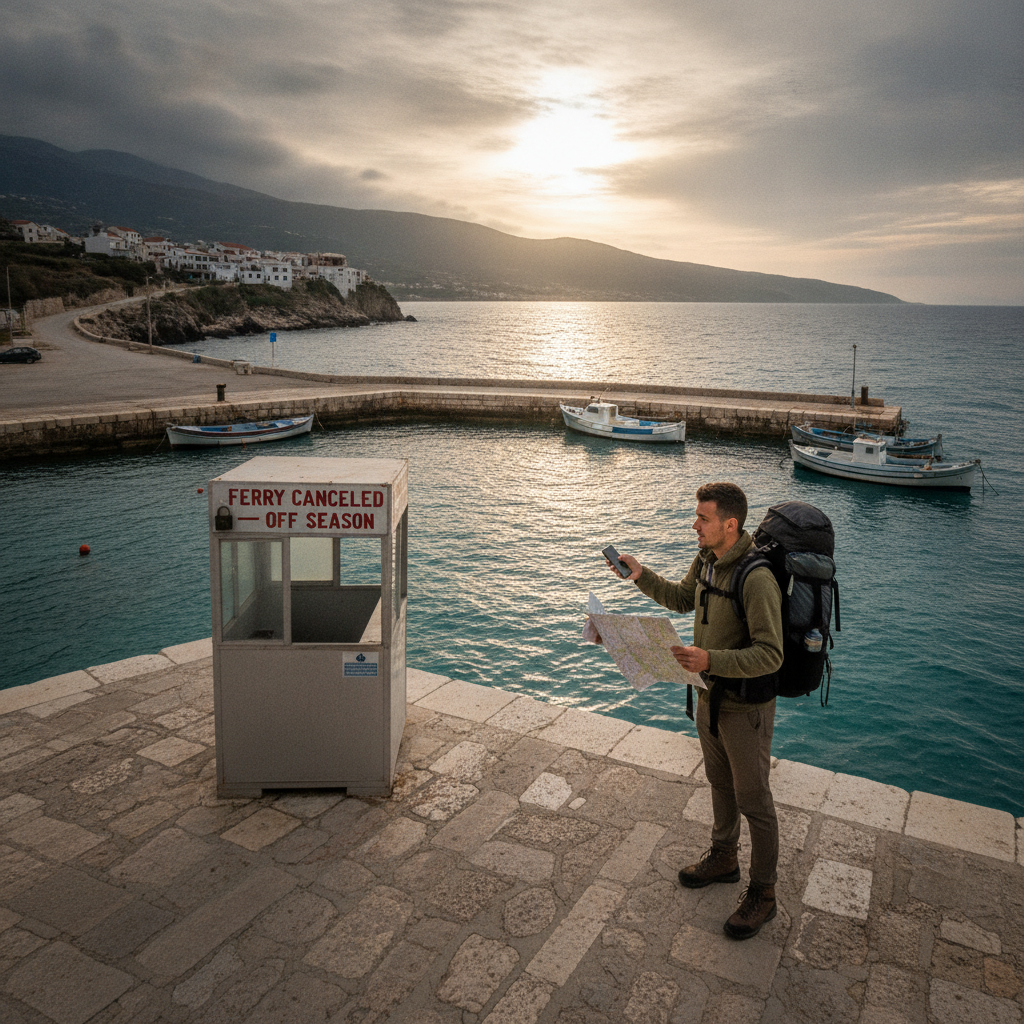
Planning a trip to Albania's southern coast comes with a particular kind of optimism that the reality on the ground doesn't always match. You've seen the photos of Ksamil's turquoise water, read about the affordable prices, and mapped out a loose route that skips the tourist infrastructure of more developed Adriatic destinations. What you probably haven't fully accounted for is how dramatically ferry availability drops outside of July and August, and how quickly accommodation options thin out once you move even a few kilometers beyond Saranda's center. These aren't obscure problems — they catch experienced travelers off guard regularly.
How Much Do Ferry Routes Actually Run Year-Round?
The honest answer is: far less than most planning resources suggest. Services connecting Saranda to Corfu — primarily operated by Finikas Lines — run reliably through peak summer, but frequency drops sharply from October through April. Some smaller seasonal operators disappear entirely after mid-September, and their websites often remain live without updating departure schedules. If you're planning a shoulder season trip and building your itinerary around a mid-week crossing, confirm directly by phone or through a local guesthouse contact rather than relying on third-party booking aggregators, which frequently display outdated timetables.
Why Does Accommodation Availability Outside Saranda Work Differently?
Saranda has enough tourist infrastructure that standard booking platforms like Booking.com and Airbnb return reasonable results year-round. Move north to villages like Himara, Dhermi, or Palasa, and the situation changes significantly. Many properties in these areas operate informally, meaning they don't list online at all, close between October and May, or switch to long-term local rentals during the off-season. Travelers who arrive expecting the same booking flexibility they'd have in a Greek island town often find themselves with far fewer options than anticipated, particularly if they arrive after dark or on a Sunday when local guesthouses may be unstaffed.
What Happens When You Arrive Without a Confirmed Room in Himara?
Himara is a good case study in how Albania's Riviera accommodation culture works. The town has a small but growing guesthouse scene, and in July and August rooms fill quickly. Outside that window, the properties that do stay open are often family-run and don't respond to last-minute online inquiries reliably. Walking in and asking directly works surprisingly well — locals frequently know which neighbors have a spare room even when nothing appears available on any platform. Carrying a translation app that functions offline, like Google Translate in downloaded mode, matters more here than in most European destinations.
How Should You Time a Multi-Stop Riviera Route?
The route from Saranda north through Borsh, Himara, Dhermi, and toward Vlora rewards patience but punishes rigid scheduling. Public furgons — shared minivans that serve as the primary inter-village transport — run on loose schedules that shift seasonally and aren't posted in any centralized place. The practical approach is to allow buffer days between stops, treat departure times as approximate, and avoid booking non-refundable accommodation at your next destination before confirming the morning's transport is actually running. Locals at your current guesthouse are consistently the most accurate source of real-time schedule information.
What Should You Know About Peak Season Crowd Dynamics in Ksamil?
Ksamil, just south of Saranda near the Butrint National Park entrance, transforms almost unrecognizably between June and August. Prices for rooms, restaurant meals, and even sunbed rentals on the beach clusters spike sharply, and the village roads — narrow and not designed for heavy vehicle traffic — become genuinely congested. Travelers who visit in late May or early October find the same scenery, warmer sea temperatures than you might expect, significantly lower accommodation rates, and a pace that makes the place feel like it actually belongs to its residents. The trade-off is fewer services and reduced evening dining options.
How Do You Handle the Cash Dependency of Remote Riviera Villages?
Card payment infrastructure along the Riviera outside Saranda remains inconsistent. Many guesthouses, small restaurants, and minibus drivers work exclusively in Albanian lek, and ATM availability drops sharply once you leave Saranda. Withdrawing more cash than you think you'll need before heading north is a straightforward strategy that almost every experienced traveler to this region recommends. A travel card like Wise works well for minimizing conversion fees when you do withdraw, but it doesn't help if the nearest ATM is 40 minutes away and you're standing in front of a guesthouse at dusk.
Why Does the Greek Island Ferry Connection Create a False Sense of Security?
Because the Corfu-to-Saranda crossing is short, affordable, and well-documented, many travelers build their entire Albania itinerary around using it as a flexible entry and exit point. The problem is that this approach assumes the service will run on the specific days you need it to, which is only consistently true in peak summer. A missed crossing due to weather, mechanical issues, or reduced off-season frequency can cascade into missed onward flights from Corfu. Building at least one extra day of buffer around any ferry crossing — and knowing that the Tirana international airport is a viable alternative exit point — gives your itinerary the resilience it needs.
What Does Offline Preparation Actually Look Like for This Region?
Maps.me with the Albania map downloaded before arrival covers the Riviera terrain well and works without any data connection. Beyond navigation, downloading guesthouse phone numbers, saving screenshots of accommodation confirmation emails, and carrying a printed note in Albanian explaining your intended destination helps enormously in situations where translation apps fail or your phone battery runs low on a mountain road. Albania's mobile coverage improves every year, but the ridgelines between coastal villages still produce dead zones that catch unprepared travelers off-guard at the worst moments.
Albania's Riviera genuinely delivers on the combination of dramatic scenery, affordable prices, and authentic local texture that draws independent travelers in the first place. The gap between expectation and reality isn't about the destination — it's about the logistics layer that sits underneath the experience. Ferry schedules, accommodation availability, cash access, and transport timing all operate on rhythms that require local knowledge rather than platform assumptions. Travelers who account for that layer before they arrive spend less time problem-solving and more time on the beach in places most visitors never bother to reach.
More Trending Articles
What First-Time Visitors to Faroe Islands Consistently Underestimate About Weather Windows, Permit Requirements, and Getting Between Islands Without a Rental Car
Robert Kim
10/04/2026