How Traveling the Albanian Alps by Furgon Instead of Organized Tour Changes What You See and What You Pay
David Park
10/01/2026
5 min read
There is a particular quality of silence that settles over a traveler the moment they realize the road ahead belongs entirely to them — no scheduled stops, no group consensus, no laminated itinerary folded in a guide's breast pocket. In the Albanian Alps, that silence has a texture to it, something between limestone dust and cold river air, and it arrives most completely for those who choose to move through the region the way locals always have: by furgon.
The Furgon and What It Actually Is
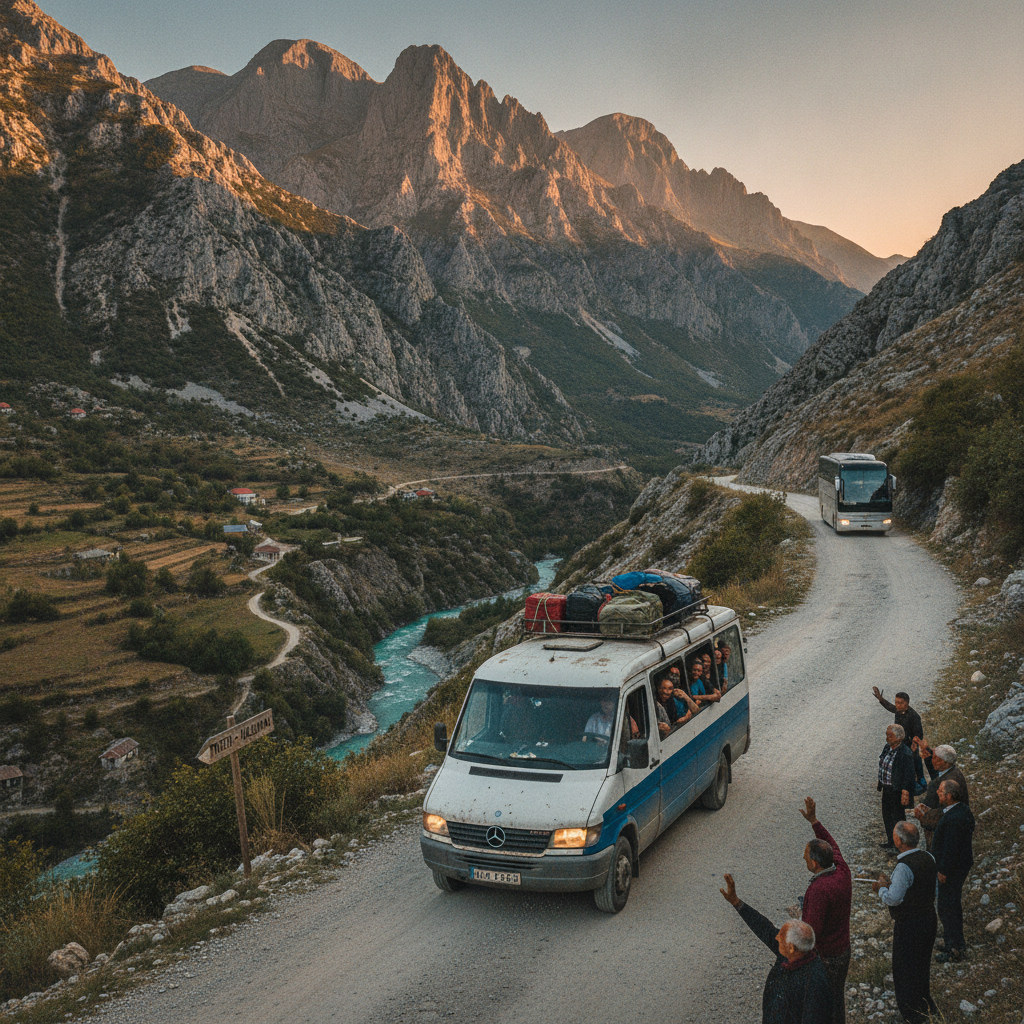
A furgon is a shared minibus, typically a repurposed Mercedes-Benz van, that serves as the primary form of intercity and inter-village transport across Albania. Unlike formal bus services with published timetables, furgons operate on a loose schedule — they depart when full, pause when someone flags them down from a roadside, and stop when a passenger needs to offload a bag of flour or a car battery bought in the city. In the north, particularly along routes connecting Shkodër to Theth or Bajram Curri to the Valbona Valley, the furgon is not a budget option or a quirky alternative. It is simply how movement happens. Understanding this distinction matters, because it reframes the entire experience from the start.
What Organized Tours Actually Offer — and What They Quietly Remove
Organized tours of the Albanian Alps, offered through operators based in Tirana or Shkodër, typically package accommodation, transport, a guide, and meals into a structured itinerary covering the Peaks of the Balkans trail or the Theth-Valbona traverse. The value they provide is real: logistics in northern Albania can be genuinely complicated, accommodation options in remote villages remain limited, and language barriers in smaller communities like Rragam or Ndërlysaj can slow even experienced independent travelers considerably. What organized tours subtract, however, is the unscripted time — the long conversations in a roadside qebaptore, the spontaneous decision to stay an extra night in Valbona because the light on the Jezerca massif looked different that afternoon, the chance encounter with a family traveling home from a funeral who explain, over shared bread, the customs of the Kanun that no briefing document can adequately convey.
The Cost Difference in Practical Terms
The financial gap between furgon travel and organized touring in this region is substantial, though not always in the ways travelers expect. A seat on a furgon between Shkodër and Theth costs a fraction of what a private transfer charges, and accommodation in village guesthouses — known locally as bujtina — is priced for regional travelers, not for tour margins. A bujtina stay typically includes a home-cooked dinner of fergese, a slow-cooked dish of peppers and cottage cheese, and fresh gjizë, a mild whey cheese, along with breakfast, making the apparent accommodation cost more comprehensive than it first appears. The real savings accumulate not in any single transaction but in the cumulative effect of buying food from village shops, eating where locals eat, and not carrying the overhead of a curated experience built for people who expect certainty at every stop.
What You Actually See Differently
The furgon route from Shkodër to Theth passes through terrain that a private transfer vehicle often accelerates through — narrow canyon roads above the Shala River, switchbacks carved into exposed limestone faces, stretches where the road narrows to a single lane and drivers communicate by horn. Seated among passengers who treat this as an ordinary commute rather than a scenic spectacle, a traveler absorbs a different register of the place. The Accursed Mountains — Bjeshkët e Namuna in Albanian — are not performing for anyone. Villages appear and dissolve into forest. A shepherd loads two sheep into the rear of the van without ceremony. None of this appears in a tour itinerary, not because operators are indifferent to it, but because it cannot be scheduled.
Practical Realities Worth Knowing Before You Go
Traveling by furgon in northern Albania requires flexibility that not every traveler genuinely possesses. Departures from Shkodër's informal transport hub near the Rus neighborhood typically begin early and taper off by mid-morning — missing the window means waiting until the following day or negotiating a costly private option. Mobile connectivity along many mountain routes remains unreliable, making offline navigation apps essential. The Peaks of the Balkans trail itself crosses into Kosovo and Montenegro, introducing border logistics that furgon travel cannot smooth over the way a guided group crossing can. Albanian, not English, is the working language of these vans, and while younger drivers often speak some Italian, communication in remote villages depends heavily on patience and gesture. None of this is insurmountable — it simply rewards travelers who prepare for texture rather than comfort.
What the Furgon Gives Back
There is a concept embedded in Albanian highland culture called besa — a pledge of absolute trust, a word given as a bond that cannot be broken. Travelers who move through this region slowly, who sit in shared vehicles and share village meals and accept the rhythms of a place rather than imposing a schedule onto it, tend to encounter besa in small but unmistakable ways: a guesthouse host who stays awake to meet a late arrival, a driver who waits an extra ten minutes because he knows the next furgon won't pass until tomorrow. These moments are not manufactured for tourism. They surface precisely because the traveler has entered the place on its own terms rather than through a buffer of organized convenience.
The silence that settles on the road out of Theth in the early morning — before the day hikers arrive, before the sound of a group briefing carries across the valley — is the silence of a place that hasn't yet decided you're worth performing for. Arriving by furgon, dusty and slightly uncertain of what comes next, is one of the few ways left to deserve it.
More Trending Articles
What First-Time Visitors to Faroe Islands Consistently Underestimate About Weather Windows, Permit Requirements, and Getting Between Islands Without a Rental Car
Robert Kim
10/04/2026