How Contactless Payment Wearables Like Smart Rings and NFC-Enabled Watches Are Replacing Physical Cards for Travelers Moving Through High-Turnover Transit Hubs
David Park
09/30/2026
5 min read
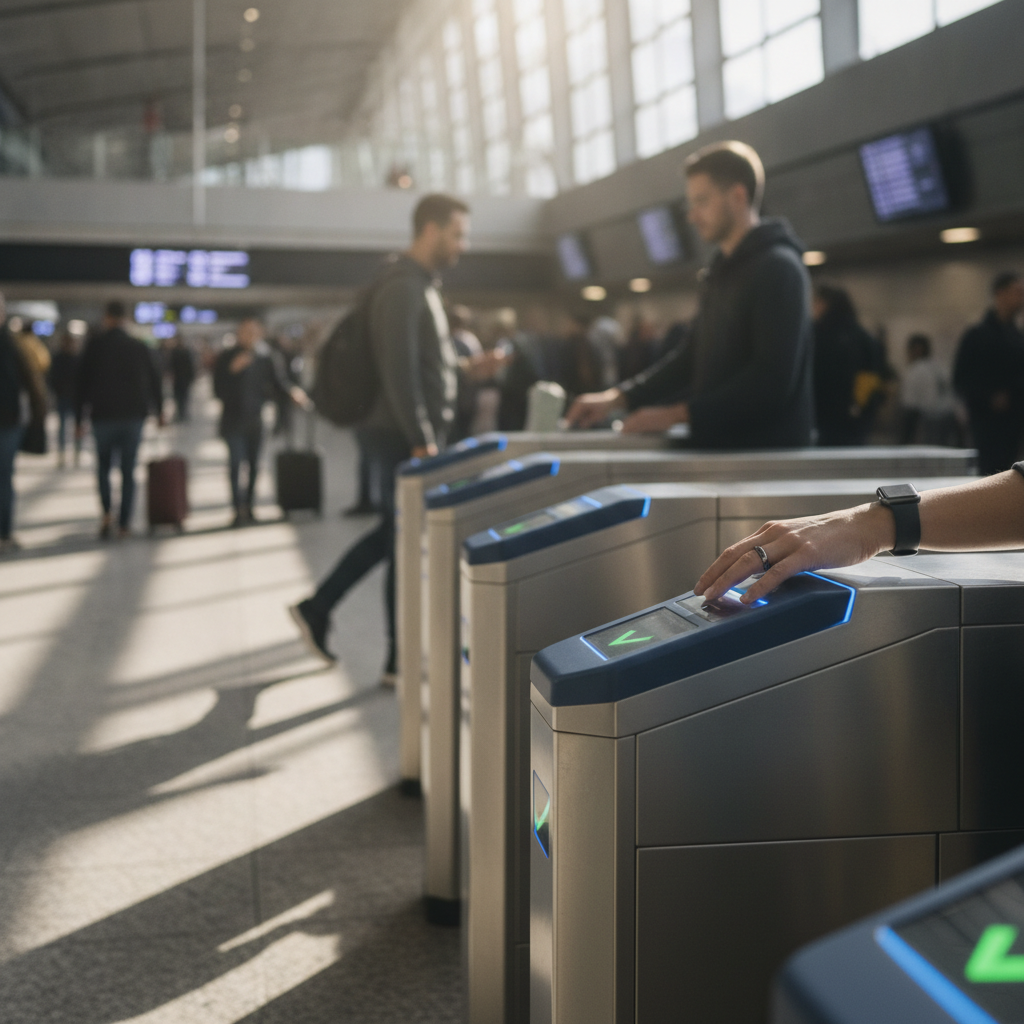
Transit hubs operate on the assumption that time is the one thing nobody has to spare. At a busy airport like Changi, Heathrow, or Seoul's Incheon, the gap between a missed connection and a smooth transfer often comes down to seconds shaved off routine actions — including payment. That pressure has pushed a growing number of frequent travelers toward contactless payment wearables: smart rings, NFC-enabled watches, and biometric bands that let users tap through a fare gate, grab a coffee, or settle a lounge tab without ever reaching into a bag.
Understanding What NFC Wearables Actually Do at the Gate
Near-field communication, or NFC, allows two devices in close proximity to exchange data wirelessly — typically within four centimeters. In the context of payment wearables, that means a traveler can authorize a transaction simply by holding a finger or wrist near a compatible terminal. Devices like the Oura Ring and McLear RingPay, along with watches running Garmin Pay or Google Wallet, store tokenized payment credentials that never expose actual card numbers during a transaction. The result is a layer of security that physical cards — which can be skimmed or misread — don't offer by default.
Why Transit Environments Make the Case Most Clearly
High-turnover transit hubs are uniquely demanding environments. Travelers are often managing carry-on luggage in both hands, rushing through unfamiliar terminal layouts, and trying to process security instructions in a second or third language. Pulling a wallet out of a zipped jacket pocket under these conditions isn't just inconvenient — it creates real friction at exactly the wrong moment. A smart ring or watch reduces that friction to a single gesture. Many transit systems in Tokyo, London, and Amsterdam have already integrated NFC tap-in infrastructure across their entire rail and bus networks, meaning wearable payments aren't a novelty in these cities — they're the default experience for informed travelers.
How Smart Rings Differ From NFC Watches in Practice
Watches like the Apple Watch Ultra and the Garmin Epix carry payment functionality as one feature among many, while dedicated payment rings like the McLear RingPay focus almost entirely on transaction capability. That distinction matters depending on a traveler's preferences. The ring form factor doesn't require charging in most cases and sits completely out of the way during bag searches and security scans. Watches, by contrast, offer richer notification ecosystems — boarding pass alerts, transit maps, currency conversion tools — that extend utility well beyond the payment moment. Travelers who already rely on a smartwatch for itinerary management tend to layer payment into that existing device, while those who prefer minimal gear often gravitate toward the ring.
Which Payment Networks and Regions Support Wearable Transactions
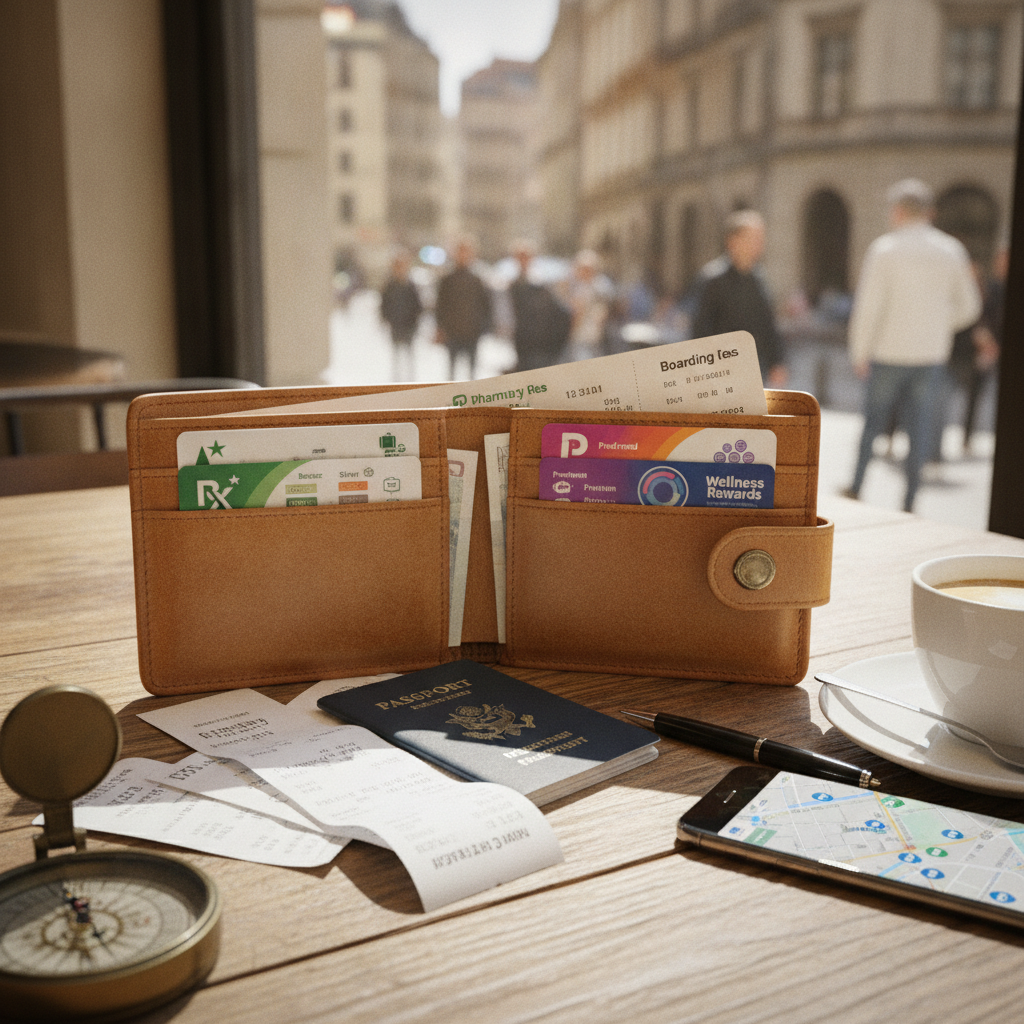
Compatibility remains the practical ceiling for wearable payment adoption. Google Wallet and Apple Pay underpin most watch-based transactions and work across a wide network of transit and retail terminals in North America, Western Europe, Japan, South Korea, and Australia. Garmin Pay operates on a slightly narrower network but covers most major European and North American hubs effectively. In markets like Southeast Asia and parts of South America, terminal infrastructure is more fragmented, and travelers should verify local NFC compatibility before relying on a wearable as the sole payment method. The safe approach in less certain regions is to carry one backup card — ideally stored in a slim card sleeve rather than a full wallet — while leaning on the wearable for the majority of transactions.
Managing Security and Device Loss Without Physical Cards as Backup
One concern that comes up regularly among travelers considering the wearable-only approach is what happens when a device is lost or runs out of power. Most platforms address this through remote lock features and tokenization that renders stolen credentials useless without biometric confirmation. Apple Watch requires a passcode if removed from the wrist, and most ring-based systems encrypt their stored credentials at the hardware level. That said, the broader principle holds: wearable payments work best as the primary method, not the only method. Keeping a single international debit card like those offered by Wise or Revolut accessible — without building a full physical wallet around it — gives travelers a functional fallback that doesn't recreate the bulk they were trying to eliminate.
Setting Yourself Up Before You Travel
Before you head to a transit hub, the setup work matters more than any in-the-moment adjustment. Start by confirming that your wearable's payment feature is linked to a card that has no foreign transaction fees — many standard bank cards quietly charge between one and three percent on international purchases, which adds up across a multi-stop trip. Then verify that your destination's transit network supports NFC tap payments, using the transit authority's official app or website. If you're traveling to Japan, load a Suica card digitally into your watch through the Wallet app ahead of time, since the in-person setup process at station kiosks can be time-consuming. Test your device with a small domestic transaction before you leave, so you're not troubleshooting the setup process in an unfamiliar terminal with a departure gate already counting down.
Contactless payment wearables are already redefining what a transit experience feels like for travelers who've made the switch. As NFC terminal infrastructure continues expanding into secondary transit networks — regional trains, ferry ports, intercity bus hubs — the gap between what a smart ring or watch can handle and what still requires a physical card will keep narrowing. The devices themselves are also evolving: longer-range biometric authentication, multi-currency wallets embedded directly in the wearable, and real-time spending categorization are all features moving from prototype into mainstream release. For travelers who move through high-turnover environments regularly, the shift toward wearable-first payment isn't a trend to watch from a distance — it's already underway.
More Trending Articles

What First-Time Visitors to Faroe Islands Consistently Underestimate About Weather Windows, Permit Requirements, and Getting Between Islands Without a Rental Car
Robert Kim
10/04/2026