What the Rise of Culinary Tourism in Secondary Japanese Cities Reveals About Traveling Beyond Tokyo and Kyoto
Robert Kim
07/31/2026
5 min read
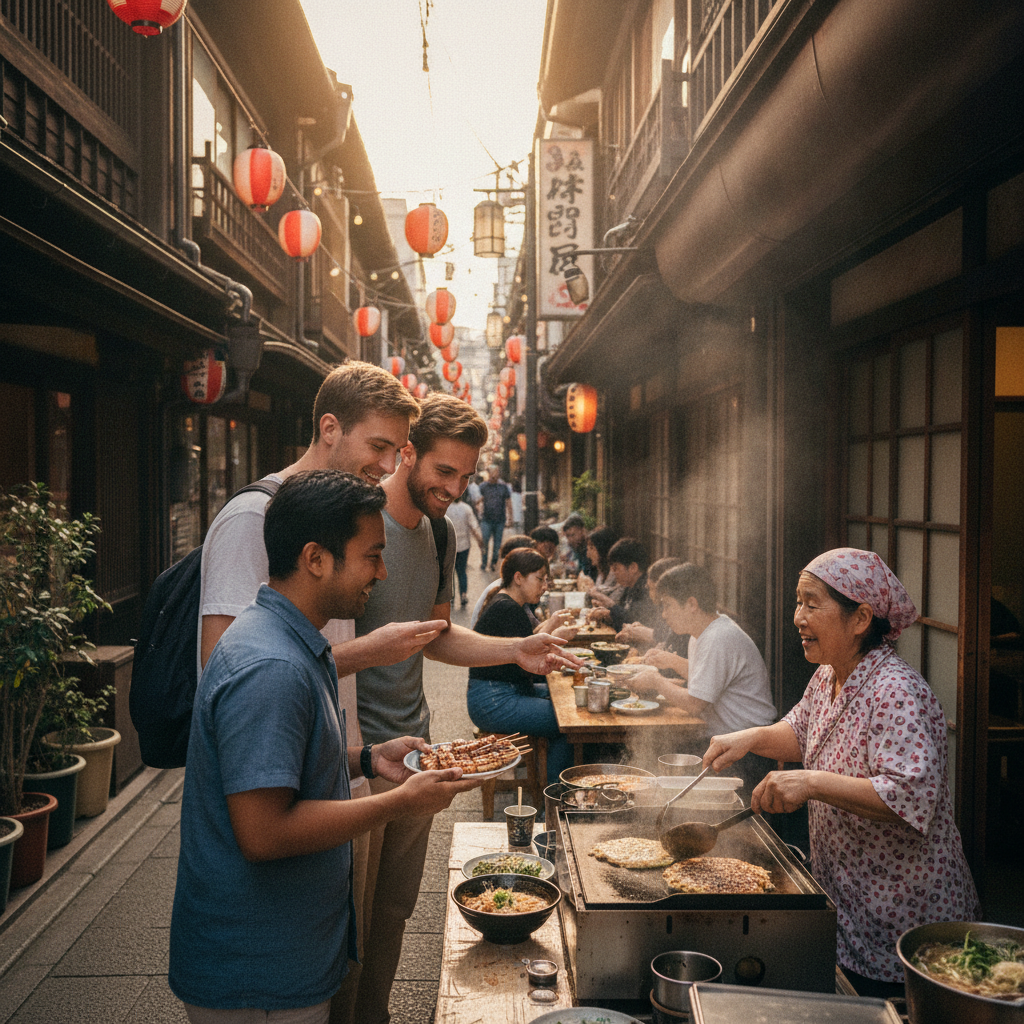
Food has always been the most honest map of a culture, and nowhere is that more apparent than in Japan. While the country has long drawn travelers to the imperial grandeur of Kyoto and the dizzying modernity of Tokyo, a quieter and arguably more revealing form of travel has been gaining momentum — one organized almost entirely around the act of eating. Culinary tourism in Japan's secondary cities has matured from a niche pursuit into a genuine travel philosophy, and the shift says something important about how sophisticated travelers are choosing to spend their time, money, and appetite.
The Geography of Japanese Food Culture
Japan's culinary identity was never centralized, even if its tourism infrastructure long suggested otherwise. Each region developed its own ingredients, techniques, and flavor profiles based on climate, geography, and centuries of local tradition. The fatty richness of Sapporo's miso ramen reflects Hokkaido's cold winters and dairy farming legacy. The delicate seafood of Kanazawa — a city on the Sea of Japan coast — arrives from waters that have fed the area's kaiseki tradition for generations. Kaiseki itself, the multi-course Japanese haute cuisine built around seasonal ingredients and aesthetic precision, reaches a different expression in Kanazawa than it does in the more polished, tourist-facing restaurants of Kyoto. Understanding that geography shapes flavor is the first step toward building a trip that moves beyond the expected.
Fukuoka, located on the northern tip of Kyushu, offers perhaps the most immediate example of how a secondary city can center an entire trip. The city's yatai culture — outdoor food stalls that line the banks of the Naka River — creates a street-level dining experience that feels genuinely communal rather than staged for visitors. Hakata ramen, with its rich tonkotsu broth and thin straight noodles, is widely available across Japan, but eating it in Fukuoka carries a different weight. The context, the neighborhood, the regulars at the adjacent stool — these details are what culinary tourism is really trading in, and secondary cities offer them in far greater abundance than destinations already shaped by mass tourism.
What Traveling for Food Actually Requires
Culinary tourism isn't simply eating well during a trip; it involves a specific orientation toward planning and movement. Travelers who organize itineraries around food tend to research neighborhoods before hotels, time their arrivals around market schedules, and treat restaurant reservations with the same seriousness they'd give to booking a flight. In cities like Osaka, this means understanding that the Kuromon Ichiba market operates on a rhythm — busiest in the morning when local restaurant buyers are sourcing ingredients, quieter and more tourist-accessible by late morning. In smaller cities like Matsuyama in Ehime Prefecture, it means knowing that the local specialty of tai meshi (sea bream rice) is found at a handful of restaurants that don't advertise broadly and close earlier than most visitors expect.
The practical dimension of this kind of travel intersects naturally with the broader values of smart trip planning. Eating where locals eat is almost always less expensive than eating where tourists are directed. A bowl of udon in Takamatsu — the capital of Kagawa Prefecture and widely considered the heartland of Sanuki udon — costs a fraction of a comparable meal in a Tokyo department store food hall, and the quality is often superior. Kagawa even has a self-styled udon pilgrimage, a loosely defined circuit of legendary shops that draws dedicated visitors from across Japan and internationally. The infrastructure around that pilgrimage — transportation options, mapped routes, local guides — has made Takamatsu meaningfully easier to visit without sacrificing any of the authentic texture that makes it worth visiting in the first place.
The Cultural Value of Eating Off the Main Path
There is a Japanese concept worth understanding here: kodawari, which describes an uncompromising dedication to craft and a refusal to compromise on quality even in small things. It is visible in the ramen shop owner who has served the same recipe for forty years, in the tofu maker in Kyoto's outskirts who sources soybeans from a single farm, in the fishmonger in Hakodate's morning market who can describe the provenance of every item on the counter. Kodawari exists in Tokyo and Kyoto, of course, but in secondary cities it often exists without the performance that comes with being observed by millions of tourists. The craft is practiced because it is simply how things are done, and encountering it in that form is a fundamentally different experience.
Kanazawa has become something of a model for how a mid-sized Japanese city can develop culinary tourism without losing itself. The Omicho Market, a covered fresh food market operating in the city center, serves both local buyers and curious visitors without catering exclusively to either. The surrounding Higashi Chaya district — a preserved geisha entertainment quarter — offers tea houses and small restaurants where the food is inseparable from the architecture and ritual that surrounds it. Visiting Kanazawa for food means encountering a city that has thought carefully about preservation and identity, and that care extends into every meal.
How to Approach a Food-Focused Trip Beyond the Major Cities
If you are planning a trip to Japan around culinary exploration, a few orientations shift the entire experience. Build your base cities around food regions rather than famous sights — Fukuoka for Kyushu, Kanazawa for the Sea of Japan coast, Takamatsu for Shikoku, Sapporo for Hokkaido. Use the Shinkansen and regional rail networks to connect them, and resist the instinct to over-schedule. The best meals in secondary cities often happen by following a recommendation from a hotel concierge, a morning market vendor, or a fellow diner rather than a curated list. Apps like Tabelog, Japan's most widely used restaurant review platform, are invaluable for reading local sentiment even without fluent Japanese — the numerical ratings and neighborhood filters are universally navigable. Allow meals to anchor the day rather than fill the gaps between sightseeing. That reorientation, small as it sounds, is what separates culinary tourism from simply eating while traveling.
The food-focused traveler who arrives in a Japanese secondary city without expectations shaped by guidebook hierarchies tends to leave having understood something about the country that a week in Tokyo alone rarely provides. Japan's depth is not distributed evenly across its most famous addresses. It spreads outward into cities that have been feeding their own people, in their own way, for centuries — and those cities are ready, quietly and without fanfare, to feed curious visitors too.
More Trending Articles
What First-Time Visitors to Faroe Islands Consistently Underestimate About Weather Windows, Permit Requirements, and Getting Between Islands Without a Rental Car
Robert Kim
10/04/2026