How Traveling the Douro Valley by Regional Train Instead of Wine Tour Bus Changes What You Experience and What You Pay
David Park
09/19/2026
5 min read
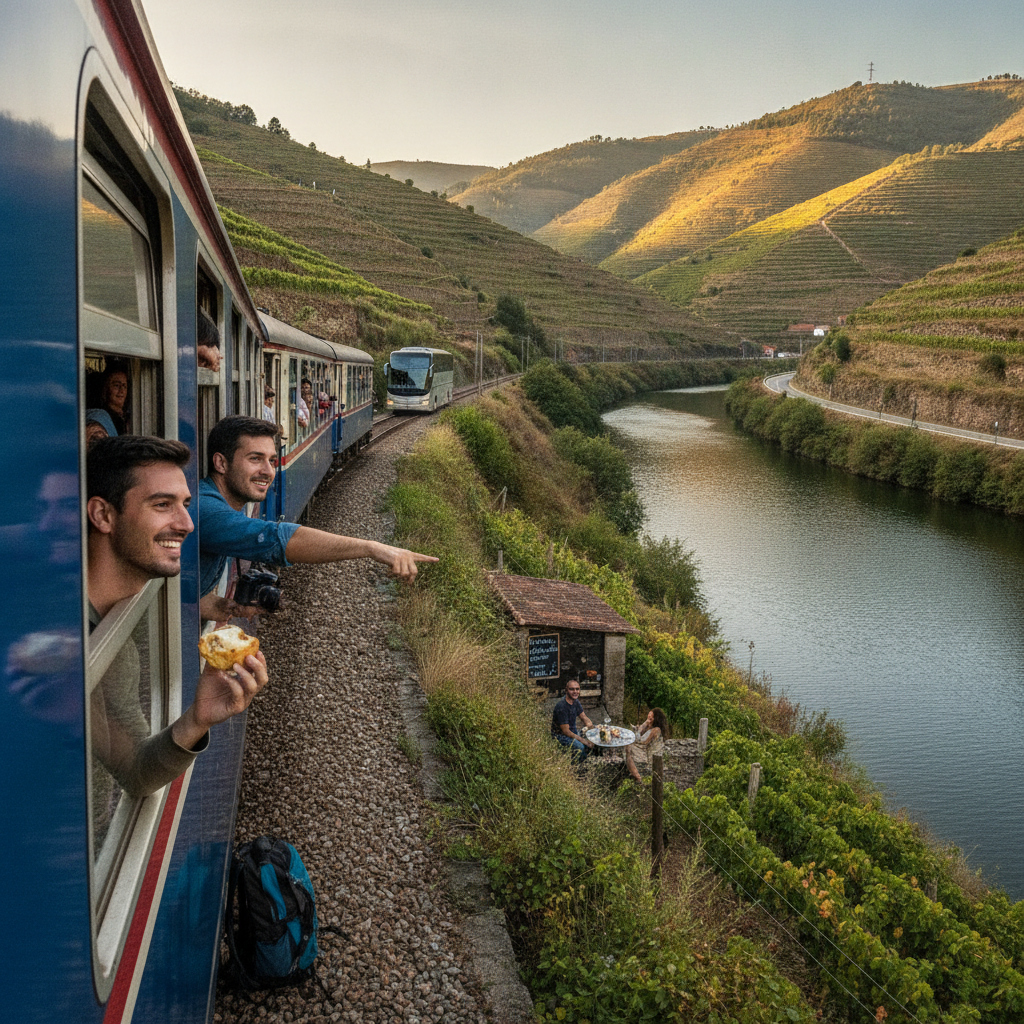
The organized wine tour has become so deeply embedded in the Douro Valley's tourism infrastructure that many visitors never consider there might be another way in. Coaches leave Porto's waterfront each morning loaded with travelers bound for quintas—the Portuguese word for wine estates—guided tastings, and panoramic lookouts that have been optimized for photographs rather than understanding. The experience is pleasant, professionally managed, and entirely predictable. But the Douro also has a railway line, the Linha do Douro, that threads alongside the river for over a hundred kilometers, stopping at small stations where the platforms are quieter, the cafés are local, and the landscape unfolds at exactly the pace it was meant to be seen.
The Railway That Follows the River
The Linha do Douro departs from Porto Campanhã station and traces the river's northern bank eastward through increasingly dramatic terrain. What begins as gentle farmland gradually transforms into the steeply terraced schist hillsides—schist being the dark, flaky stone that defines the valley's geology and holds heat through the cold nights to ripen the grapes. The train moves slowly enough to register this change, and the window seat becomes something close to a moving documentary. Stations like Pinhão, the valley's most celebrated stop, sit directly beside the river, their platforms decorated with azulejos—the traditional Portuguese painted ceramic tiles—depicting scenes of grape harvest and rural life. Arriving here by train, surrounded by the smell of river air and stone, is a fundamentally different entry point than stepping off an air-conditioned coach in a quintas car park.
What Changes When the Itinerary Belongs to You
Tour buses operate on schedules designed around logistics—estate opening hours, lunch reservations, driver regulations. The regional train removes that scaffolding entirely, which means a traveler can stay in Pinhão for two nights instead of four hours, walk the levadas in the early morning before the day heats up, and choose a quinta based on genuine interest rather than tour commission relationships. The Douro has hundreds of estates, from the grand export houses like Ramos Pinto and Quinta do Crasto to smaller family producers who receive visitors only by appointment and pour wines that never appear in duty-free shops. Reaching those estates requires initiative, but the CP—Comboios de Portugal, the national rail operator—timetable combined with a local taxi or rental bicycle makes it entirely workable.
The Cost Difference Is Not Subtle
A full-day guided wine tour from Porto typically costs somewhere between sixty and one hundred euros per person before the extras—additional tastings, a formal lunch, souvenir bottles—that guides are often incentivized to encourage. A regional train ticket from Porto Campanhã to Pinhão costs a fraction of that, typically under fifteen euros each way, depending on the service class and booking timing. Accommodation in the valley shifts dramatically once a traveler moves beyond the branded quinta hotels: village guesthouses in towns like Peso da Régua, the regional capital of Port wine production, charge rates that reflect actual local economics rather than a curated hospitality experience. Eating at a tasca—a simple, family-run Portuguese restaurant—in Régua rather than at a tour-inclusive estate lunch also means encountering regional food honestly rather than as a performance.
Pinhão as a Base Rather Than a Pit Stop
Most tour operators treat Pinhão as a photographic interlude—enough time for a glass of white Port on a terrace and a few minutes on the famous tiled train platform before the group reassembles. Staying there overnight, or for several nights, reveals something entirely different. The village is small, but it functions as a genuine community, and the rhythms of local life—the morning bread deliveries, the older men playing cards outside the café, the vineyard workers moving through the lanes before sunrise—are accessible to anyone willing to slow down enough to notice them. The surrounding hills are walkable, the river is swimmable in summer, and the light in the late afternoon, when it cuts across the terraced vineyards at an oblique angle, is the kind of thing that stays with a person long after the wine itself has been forgotten.
What Slow Travel Teaches About Wine
There is an argument, worth taking seriously, that understanding wine in the Douro is impossible without understanding the land and labor that produce it. The quinta tours offered through packages do explain the winemaking process, but they do so in controlled environments designed to encourage purchases. Spending more time in the valley—walking the steep terraces, seeing the vineyard walls that were built by hand over centuries, talking to workers at the edge of a property—provides a context that no scripted tasting can replicate. The Douro's distinctive wines, particularly its aged tawny Ports, carry flavors shaped by extreme heat, thin soil, and human endurance. Knowing where those qualities come from changes the way they register on the palate.
Before You Book Your Tickets
If you're planning this journey, a few practical realities are worth understanding before departure. The Linha do Douro's regional services are not high-speed; the trip to Pinhão takes roughly two and a half hours from Porto, and some connections require patience. CP tickets are bookable online through the official portal, and weekend trains in high season fill up with Portuguese day-trippers who share the same instinct for the valley's beauty. Pinhão has limited accommodation, and the best-situated guesthouses benefit from early reservation. Bringing a detailed walking map—the Douro has well-marked trails, but phone signal is inconsistent across the schist hills—is practical rather than optional. A small daypack with water matters more than most visitors anticipate, because the terraced landscape is genuinely steep and the summer sun reflects off the stone with particular intensity.
The Douro Valley is one of those places that tends to be remembered most vividly by the travelers who took the slower route into it. The wine tour bus delivers an experience, but the regional train delivers the valley itself—unscripted, unhurried, and priced in a way that leaves room to linger. That distinction, between consuming a destination and actually inhabiting it for a while, is perhaps the most useful thing a traveler can carry home.
More Trending Articles
What First-Time Visitors to Faroe Islands Consistently Underestimate About Weather Windows, Permit Requirements, and Getting Between Islands Without a Rental Car
Robert Kim
10/04/2026