How Visiting National Parks During Shoulder Weekdays Compares to Weekend Peak Crowds in Terms of Cost, Access, and Experience Quality
Marcus Chen
08/04/2026
5 min read
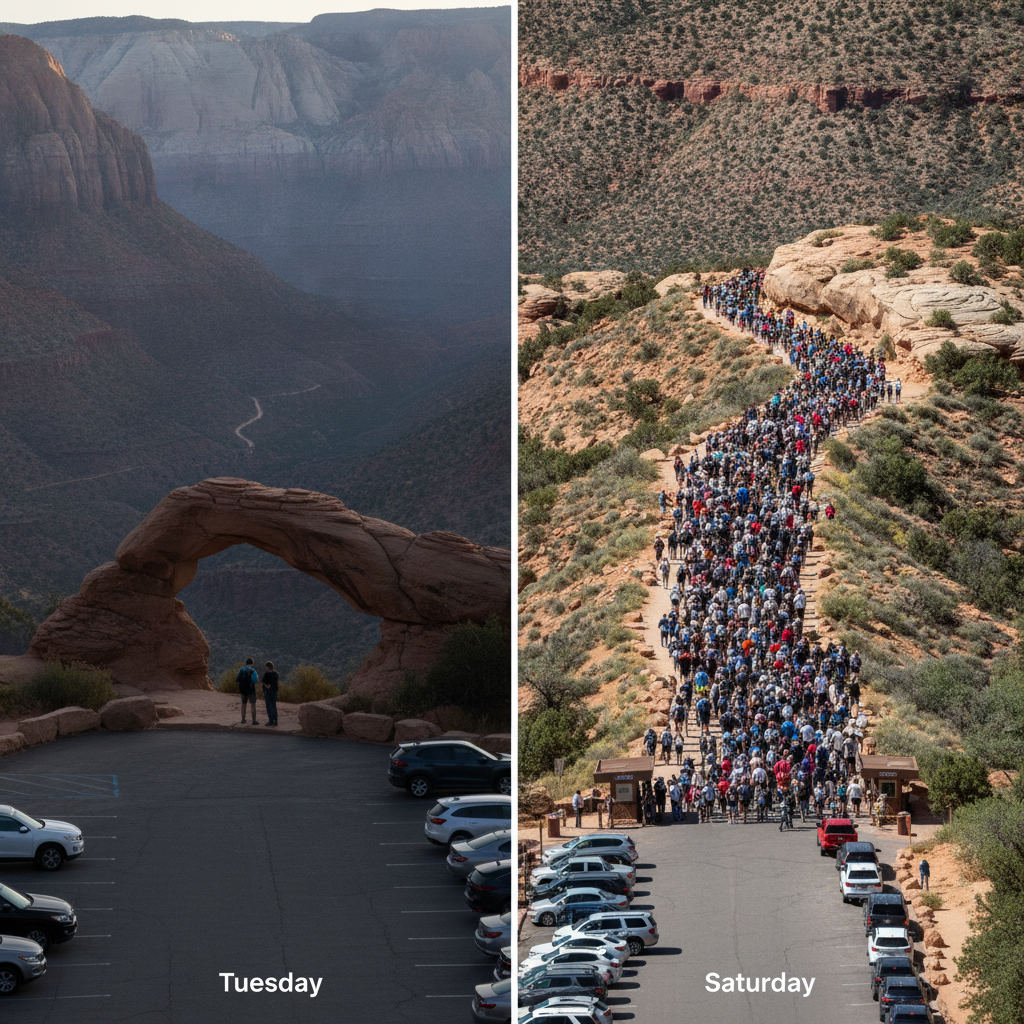
National parks have a timing problem. Millions of visitors pile into places like Zion, Yellowstone, and the Great Smoky Mountains on the same summer weekends, creating parking gridlock, trailhead queues, and campsite lotteries that would test anyone's patience. What most visitors don't realize is that showing up mid-week during shoulder season — think late spring or early fall — can transform the exact same destination into something that feels almost private. The difference in experience quality is significant, and so are the financial advantages.
Entrance Fees Stay the Same, But Everything Else Gets Cheaper
The America the Beautiful annual pass and standard park entrance fees don't change based on the day you visit. What does change is everything around them. Mid-week hotel rates near popular park entrances — places like Gatlinburg near the Smokies or Springdale outside Zion — can drop noticeably compared to Saturday-night pricing. Campsite availability through Recreation.gov opens up without the scramble, and you're less likely to need a reservation made months in advance. Even gear rentals, guided tours, and shuttle services often quote lower rates when demand softens.
Parking and Trailhead Access Becomes Genuinely Easier
On a summer Saturday at Arches National Park, the entrance road can back up for miles by mid-morning, and the park occasionally closes its gates entirely when capacity is reached. That doesn't happen on a Tuesday in October. You pull in, find a spot, and start hiking without the frustration of circling a lot for forty minutes. This practical difference is easy to underestimate until you've experienced both versions of the same park. Trailhead access matters because it determines when you actually start moving and how much of your day gets spent waiting rather than exploring.
Wildlife Sightings Improve With Less Human Activity
Animals in national parks don't follow visitor schedules, but they do respond to noise and foot traffic. Quieter weekday mornings in shoulder season create better conditions for spotting wildlife in natural behavior — grazing, foraging, or simply moving through open areas without retreating from crowds. In places like Grand Teton or Olympic National Park, early weekday visits during fall shoulder season often produce more memorable wildlife encounters than any weekend in peak summer. Fewer people on the trail means fewer sudden movements and conversations that would otherwise push animals deeper into cover.
Campsite Quality and Selection Opens Up Substantially
Camping in popular national parks during peak weekends often means booking four to six months ahead just to secure a site, and you may end up with whatever's left rather than what you'd actually prefer. Shoulder weekday visits flip that dynamic entirely. Campgrounds that are fully booked Friday through Sunday sometimes have open spots available with little advance planning. You get to choose sites based on shade, proximity to water, or distance from restrooms — factors that genuinely affect comfort — rather than just accepting whatever the reservation system assigns you.
Ranger Programs and Interpretive Experiences Are More Accessible
Most national parks run ranger-led programs, evening talks, and guided walks that are free with park admission. On crowded summer weekends, these fill up fast and can feel rushed when too many people show up at once. Visiting on a shoulder weekday gives you a better shot at attending a program with a small group, which means more opportunity to ask questions and have an actual conversation with a ranger. These interactions often produce the kind of insight — about geology, ecology, or park history — that you'd never get from a trail sign or park brochure.
Photography and Quiet Moments Are Actually Available
MesaFlatTop, Horseshoe Bend, and similar iconic viewpoints have essentially become managed photo queues on peak weekends. Getting a clean shot without strangers in the frame requires either arriving before sunrise or waiting a long time. On a shoulder weekday, the same viewpoint might have just a handful of people present, and the softer light of fall or spring often makes for better photography anyway. Beyond photos, there's genuine value in standing somewhere extraordinary without being jostled. That quieter version of the experience is closer to what most people imagine when they picture visiting a national park in the first place.
Shuttle Systems and Park Transit Run More Smoothly
Parks like Zion and Bryce Canyon depend on mandatory or strongly encouraged shuttle systems during peak season. On busy summer weekends, those shuttles can run at standing-room-only capacity, making each stop feel more like a city bus commute than a park experience. During shoulder weekdays, you often board a shuttle with room to sit and actually look out the window. At Bryce, that difference means arriving at rim viewpoints relaxed rather than crammed in with a crowd. The transit infrastructure works the way it was designed to when visitor volume is lower, which makes the whole day flow better.
The Overall Value Calculation Shifts Noticeably
When you factor in lower surrounding accommodation costs, easier access, better campsite selection, smaller program groups, and more genuine solitude, shoulder weekday visits to national parks deliver substantially more for roughly the same entrance cost. The trade-off is usually some flexibility in your schedule, which not everyone can manage — but for those who can shift their trip by even a few days, the difference in experience is hard to overstate. National parks are among the best-value travel experiences available, and timing your visit strategically makes that value even clearer.
Planning a national park trip takes some adjustment to pull off on a weekday, but even one mid-week visit to a park you've only seen on crowded weekends is enough to change how you think about timing every future trip. Start with a park you've already been to — somewhere familiar — and notice the difference. Chances are you won't want to go back to peak-weekend visits once you've experienced the alternative.
More Trending Articles
What First-Time Visitors to Faroe Islands Consistently Underestimate About Weather Windows, Permit Requirements, and Getting Between Islands Without a Rental Car
Robert Kim
10/04/2026