How Optical Store Pricing Tiers for Anti-Reflective and Blue-Light Lens Coatings Differ Between Independent Opticians and Chain Retailers
Jennifer Walsh
09/29/2026
5 min read
Lens coatings are one of the most marked-up line items in the entire eyewear industry, and where you buy them matters more than most people realize. Anti-reflective and blue-light coatings can double the cost of a basic prescription lens depending on where you walk in the door — and the difference between an independent optician and a chain retailer like LensCrafters or Warby Parker isn't just about price. It's about what you actually get, how it's bundled, and whether the add-on you're paying for is even the right one for your lifestyle.
If you've ever handed over your insurance card and still walked out with a surprisingly large bill, you're dealing with a pricing structure that's worth understanding before you book your next eye appointment.
How Do Independent Opticians Typically Structure Coating Prices?
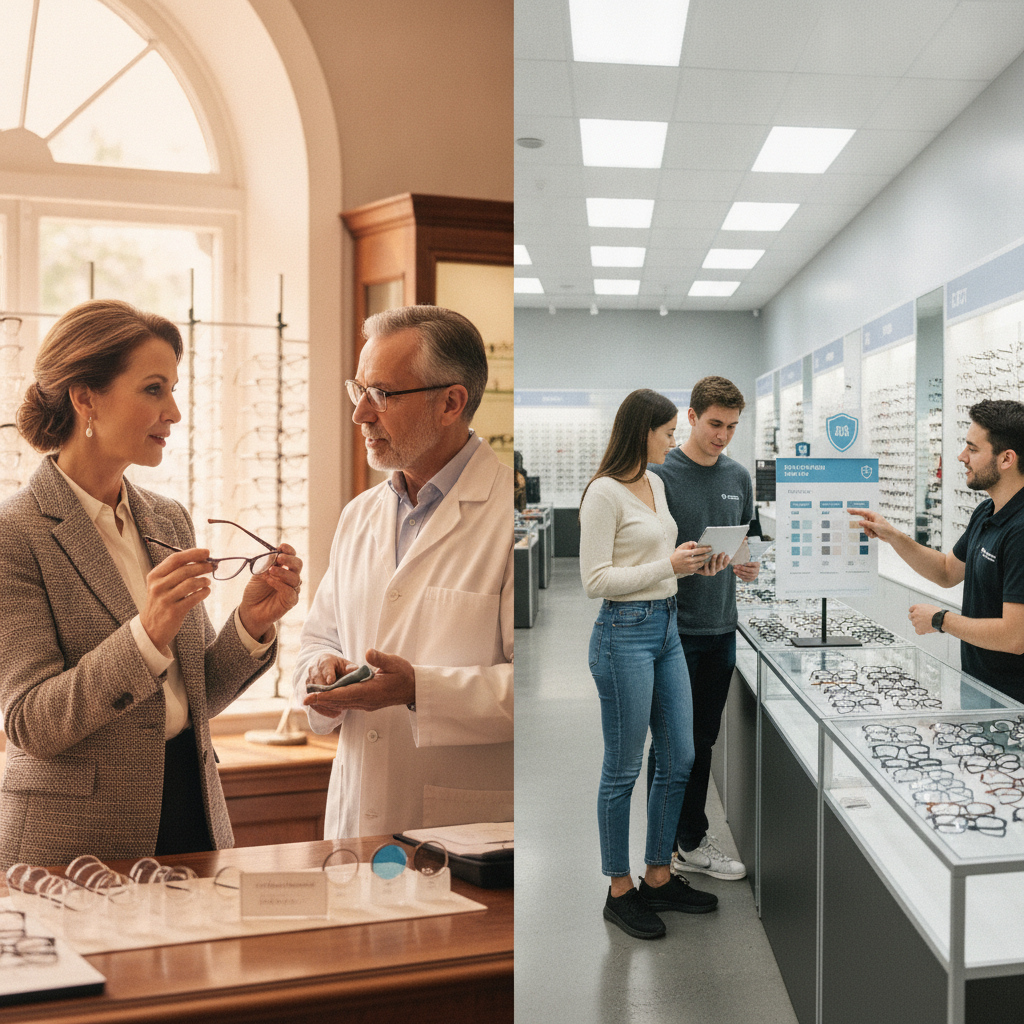
Independent opticians tend to price coatings as discrete, itemized upgrades rather than folding them into bundled packages. When you sit down with a private practice optician, you'll usually see anti-reflective coating listed as a separate line item — often starting at a moderate base price and scaling upward based on coating tier (standard, premium, or ultra). Blue-light filtering is frequently offered as an additional layer on top of that or built into a specific lens material like Essilor's Crizal Prevencia line.
The advantage here is transparency. You can see exactly what each upgrade costs and make a deliberate decision. The downside is that premium-tier coatings at independents can run meaningfully higher than what chain retailers advertise, because independents carry fewer volume discounts from manufacturers and typically stock higher-end lab partners.
What Makes Chain Retailer Coating Packages Different?
Chain optical retailers almost always bundle coatings into tiered lens packages rather than listing them individually. At a location like America's Best or Visionworks, you'll encounter something like a "standard," "enhanced," or "premium" lens option — and buried inside each tier is a combination of scratch resistance, anti-reflective treatment, and sometimes blue-light filtering. The headline prices look attractive because the bundling obscures the per-coating cost.
The real issue is that you may end up paying for coatings you don't need or, conversely, assuming a coating is included when it actually sits one tier above what you selected. Reading the package comparison chart carefully — before you commit — is the single most important thing you can do when shopping at a chain.
How Does Blue-Light Coating Pricing Compare Across Both Models?
Blue-light filtering has become a significant revenue line for both independent and chain optical retailers, and pricing reflects that. At chains, it's often positioned as a mid-to-premium tier upgrade, designed to encourage an upsize from a base package. At independents, it tends to be quoted as a standalone add-on, sometimes more expensive per unit but occasionally available through lens brands like Zeiss BlueGuard at prices that reflect actual material cost rather than packaging psychology.
It's also worth knowing that not all blue-light coatings work the same way. Surface-applied coatings perform differently from blue-light-filtering lens materials, and the distinction matters if you're spending significant time in front of screens. Asking specifically whether the filtering is a surface treatment or built into the lens substrate is a question worth raising at any retailer, independent or chain.
When Does an Independent Optician Actually Offer Better Value?
For complex prescriptions or specialty lenses — high-index materials, progressive bifocals, or lenses for demanding visual environments — independent opticians frequently offer better value despite higher sticker prices. They have more flexibility to match coatings to your specific prescription and lifestyle without the constraints of a chain's pre-set tier structure.
If you need a coating that performs well under specific lighting conditions, like driving at night or working long hours under fluorescent office lights, an independent optician is more likely to recommend the right product rather than the next tier up. The consultation itself tends to be longer and more detailed.
How Can You Compare Prices Without Wasting a Full Appointment?
Call ahead. Most optical retailers — chain or independent — will give you a general price range for their coating tiers over the phone before you commit to an appointment. Ask specifically: what does your standard anti-reflective coating cost as a standalone add-on, and what does the blue-light filter add on top of that?
You can also use online retailers like Zenni Optical or EyeBuyDirect as a pricing baseline. Their coating costs are listed transparently and reflect what the coatings themselves cost without a retail markup. That gives you a realistic floor price to compare against what a local retailer is quoting, which makes in-person negotiation easier and more informed.
What Role Does Vision Insurance Play in the Price Gap?
Vision insurance changes the calculation significantly and not always in the way you'd expect. Many plans cover a basic anti-reflective coating but apply only a partial allowance toward premium or blue-light tiers, leaving the remainder as out-of-pocket cost. Chain retailers often have in-network agreements that reduce your visible copay, making their pricing feel lower — but the out-of-pocket difference on coating upgrades can sometimes exceed what you'd pay without insurance at a well-priced independent.
Always ask the billing staff to break down what your insurance covers per coating tier before you select your lenses. The numbers are almost never displayed prominently, but they're available if you ask.
How Should You Decide Where to Buy Based on What You Actually Need?
The honest answer depends on your prescription complexity, how frequently you replace your glasses, and how much your insurance offsets. For simple prescriptions with standard coatings, chain retailers offering bundled packages can be cost-effective — especially if you're replacing glasses every one to two years. For high-index or complex progressive lenses where coating compatibility matters more, an independent optician with access to premium lab networks like Shamir or Hoya often delivers better long-term value even at a higher initial price.
Treating the coating selection as a separate decision from the frame purchase also helps. Don't let the excitement of choosing frames rush you into a coating tier you haven't thought through. The coatings last as long as the lenses do — that decision deserves its own moment of attention.
Taking a few extra minutes to compare what's actually in each tier, ask about what the coating is made of, and check your insurance breakdown will almost always save you money and get you lenses that actually match how you live. You've got more leverage in this process than the pricing boards suggest — use it.
More Trending Articles

What First-Time Visitors to Faroe Islands Consistently Underestimate About Weather Windows, Permit Requirements, and Getting Between Islands Without a Rental Car
Robert Kim
10/04/2026