What Traveling the Caucasus Region in Late Autumn Actually Involves in Terms of Logistics, Weather Trade-Offs, and Crowd Dynamics
Robert Kim
08/14/2026
5 min read
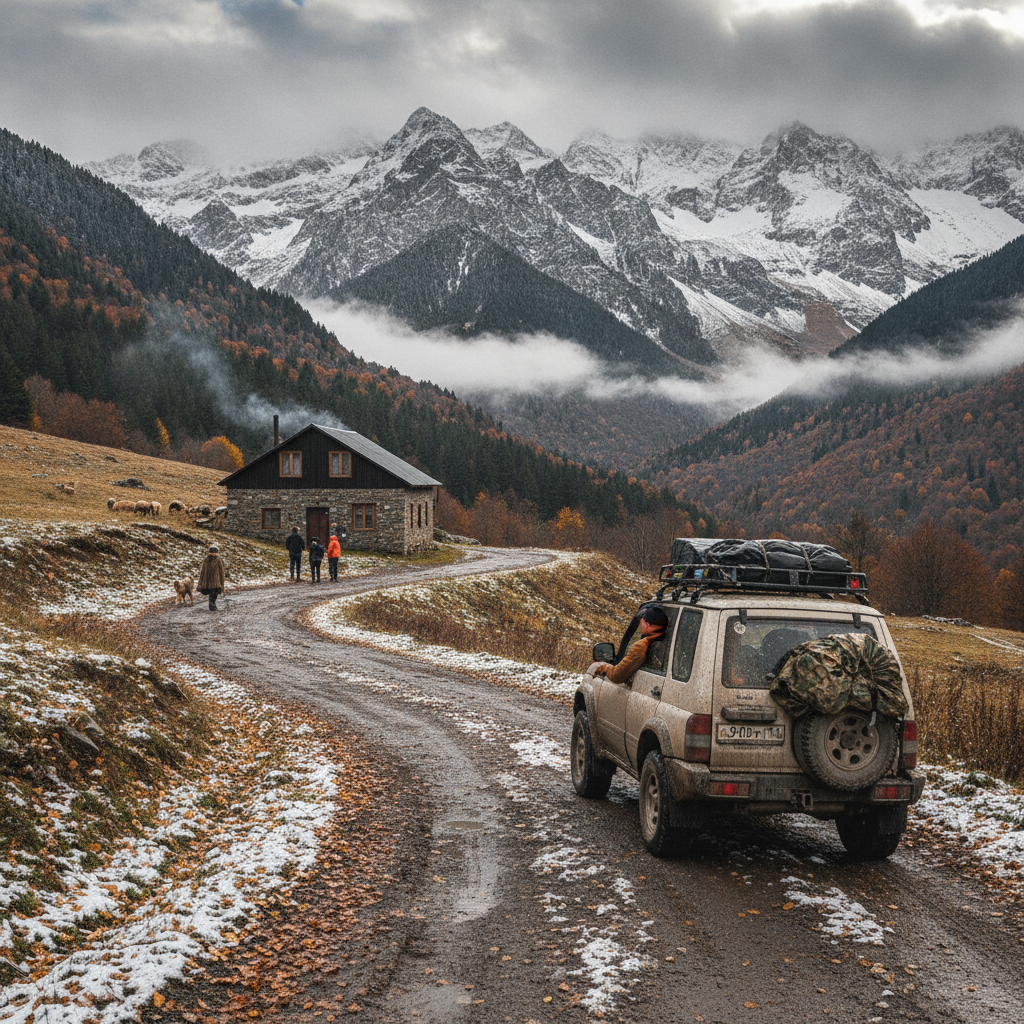
Late autumn has a way of filtering out the casual travelers. The ones who remain—who choose October through November for a trip through Georgia, Armenia, and Azerbaijan—tend to be the ones who get the most out of it. The Caucasus in this season rewards patience and a reasonable tolerance for unpredictability, and if you understand what you're actually signing up for, the trade-offs lean heavily in your favor.
How Does the Weather Actually Behave Across the Three Countries?
The Caucasus doesn't follow a single climate script, which is part of what makes late autumn both interesting and occasionally frustrating to plan around. Georgia's capital, Tbilisi, tends to stay mild and dry well into October, but the mountainous regions—including the popular Kazbegi area—can see snow accumulation by mid-October that closes certain roads entirely. Armenia's Yerevan holds warmth longer than you'd expect at its elevation, often staying pleasant through late October before dropping sharply in November. Azerbaijan's Baku, sitting on the Caspian coast, remains the most temperate of the three, with sea air keeping temperatures moderate even when the rest of the region turns cold.
What this means practically is that you'll want to plan your itinerary in a directional arc rather than bouncing arbitrarily between cities. Moving from higher elevations early in the trip—hitting Kazbegi or Armenia's Dilijan forest region in early October—then shifting toward Baku by November gives you the best chance of staying ahead of the worst of the weather.
What Happens to Crowds and Prices After the Summer Rush?
By October, the summer crowds that packed Tbilisi's Abanotubani sulfur bath district and Yerevan's Cascade complex have thinned considerably. Hotels that required advance booking in July and August become easier to access on shorter notice, and the boutique guesthouses that define travel in this part of the world often drop their rates meaningfully without advertising it publicly. You won't always find these reductions listed upfront—sometimes a polite direct inquiry or using a platform like Booking.com's flexible date search will surface deals that the standard fixed-date search misses.
The trade-off is that some seasonal businesses—certain wine tour operators in Georgia's Kakheti region, small hiking guide services, outdoor restaurants—begin winding down in late October. Georgia's famous wine harvest, the Rtveli, actually peaks in September and early October, so catching the tail end of that is possible if you time it right. After that window, Kakheti gets quieter but also more authentically local, which many travelers find more appealing than the harvest festival atmosphere.
How Do You Handle Transportation Between Border Crossings?
Getting between the three countries overland is manageable, but it requires more research than most travelers expect. The Georgia-Armenia border crossing at Sadakhlo is the busiest and most traveler-friendly, with shared marshrutka minibuses running regularly from Tbilisi's Ortachala bus station. The Georgia-Azerbaijan crossing at the Red Bridge is equally straightforward. Crossing directly between Armenia and Azerbaijan remains impossible due to ongoing political tensions, so any route connecting those two countries needs to route through Georgia.
For real-time border crossing conditions and updated transport schedules, the Rome2rio app works well as a starting framework, though you'll want to verify current minibus schedules through local Facebook travel groups or guesthouse owners, who often have the most accurate day-of information. In late autumn, some shared transport services reduce their frequency, so building an extra day of buffer at each border town is a sensible call.
What Should You Know About Connectivity and Offline Tools?
All three countries have decent mobile data coverage in urban centers, but rural areas—especially mountain roads in Georgia and the countryside between Armenian towns—can drop to no signal for extended stretches. Downloading offline maps through Maps.me before you depart each city is one of the most practical things you can do. Google Maps offline mode also works in this region, though Maps.me tends to have more granular coverage of secondary roads.
Local SIM cards are inexpensive and widely available in Tbilisi, Yerevan, and Baku, and picking one up on arrival is far more practical than relying on international roaming. Georgian carrier Magti and Armenian carrier Viva-MTS both offer tourist-friendly prepaid data packages that cover the duration of a standard two-week visit without any complicated activation requirements.
How Does Late Autumn Affect Cultural Sites and Opening Hours?
One of the real advantages of visiting in late autumn is that major cultural sites—the cave city of Vardzia in southern Georgia, the medieval monasteries of Geghard and Tatev in Armenia, the Old City of Baku—feel dramatically different without the summer crowd density. Geghard Monastery, in particular, which can feel almost processional with visitors in July, becomes a place where you can actually sit in silence and absorb the architecture. The light in October and November also tends to be softer and more photogenic than the harsh midday glare of summer.
Opening hours at some smaller museums and visitor centers begin to shift in November, with reduced hours or occasional closures on weekdays. Checking hours through the official cultural heritage websites of each country—or through recent traveler reports on TripAdvisor—takes only a few minutes and can save a wasted journey. A few of the more remote monasteries in Georgia are only accessible with a guide service that may stop operating after mid-October, so confirming that logistics early is worth the effort.
What Packing Decisions Actually Matter Here?
The biggest mistake travelers make in this region in late autumn is packing for one type of weather. A single trip can take you from Baku's mild coastal warmth to a snowy road in Georgia's mountains within the same week. Layering is less of a travel cliché here and more of a functional necessity. A packable down jacket, waterproof outer shell, and a pair of shoes that can handle wet cobblestone streets will carry you through almost every scenario the season produces.
Weather apps like Windy are particularly useful in the Caucasus because they model elevation-based forecasts rather than just city-level averages, which matters enormously when you're planning a day trip from Tbilisi up to Kazbegi or from Yerevan toward the Armenian highlands.
The Caucasus in late autumn sits in a window that's genuinely underused by international travelers, and that gap is part of what makes it rewarding. Fewer crowds, honest prices, and landscapes shifting into their quieter seasonal colors—it's a combination that suits unhurried, curious travelers well. Starting with a loose framework of where you want to be early versus late in the season, and filling in the details from there, is all the planning structure you really need to get moving.
More Trending Articles
What First-Time Visitors to Faroe Islands Consistently Underestimate About Weather Windows, Permit Requirements, and Getting Between Islands Without a Rental Car
Robert Kim
10/04/2026