How Verified Resale Platforms for Outdoor and Travel Gear Use Condition Grading Tiers That Differ Significantly From General Secondhand Marketplaces
Jennifer Walsh
09/20/2026
5 min read
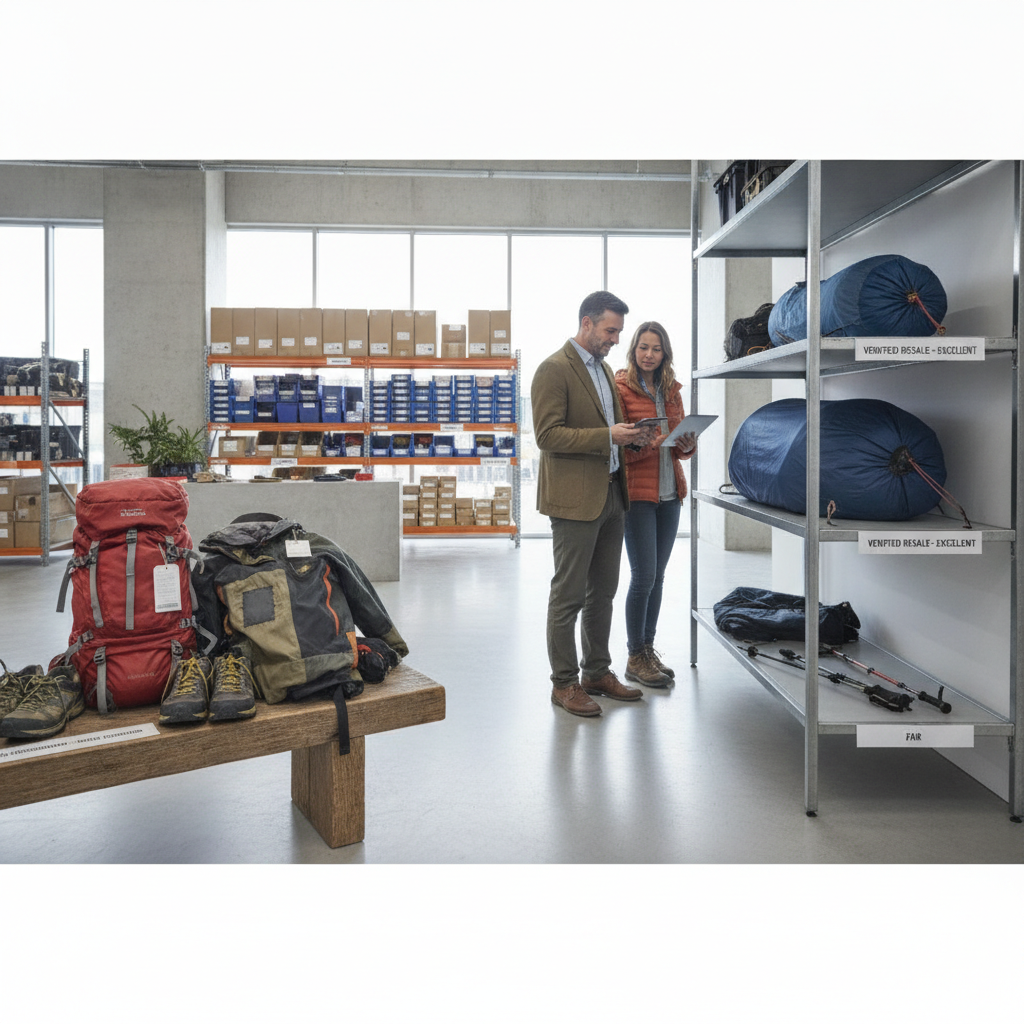
The secondhand market for outdoor and travel gear operates under a fundamentally different logic than the broader resale economy. While a general marketplace like eBay or Facebook Marketplace relies almost entirely on seller self-reporting — a system built on subjective language and trust — specialized resale platforms for technical equipment have developed structured grading frameworks that reflect the operational demands of the gear itself. A tent that looks clean may have compromised seam tape. A backpack frame that appears intact may have stress fractures invisible in casual photos. These distinctions matter enormously when gear is expected to perform in remote or physically demanding conditions, and verified resale platforms have built their entire value proposition around closing exactly that knowledge gap.
Why Outdoor Gear Grading Cannot Rely on General Standards
General secondhand platforms typically use a loose spectrum of descriptors — "like new," "good," "fair," "poor" — that carry no standardized meaning across sellers or categories. What one seller calls "excellent condition" another might call "good," and neither assessment necessarily accounts for the functional integrity of technical components. Outdoor and travel gear, by contrast, includes materials and systems that degrade in ways invisible to untrained eyes. Waterproof membranes lose their bonding, zipper sliders develop internal wear, and insulation loses loft long before the outer shell shows visible damage. Platforms like Geartrade and REI Used have responded by developing grading criteria that evaluate functional performance, not just cosmetic appearance.
The Anatomy of a Verified Condition Tier System
Specialized resale platforms typically organize their condition tiers around three to five defined grades, each with explicit criteria covering both appearance and function. A platform like Backcountry's resale arm or REI's used gear program will distinguish between a jacket that is "lightly used" with full waterproofing intact versus one that is "well used" but has been re-proofed with DWR treatment — a meaningful difference in expected performance longevity. Some platforms go further, requiring inspection notes that document specific wear points: zipper pulls, velcro closures, seam integrity, and insulation compression. This level of transparency is structurally impossible on general marketplaces, where no standardized inspection protocol exists and listings are created by sellers with widely varying expertise.
How Inspection Protocols Set Specialized Platforms Apart
The credibility of a condition tier depends entirely on who performs the inspection and what standard they apply. On platforms built specifically for outdoor and travel gear, inspections are conducted by staff trained to evaluate category-specific failure points. A sleeping bag rated to a certain temperature, for example, must be assessed not only for cleanliness but for loft retention — the physical property that determines its thermal performance. Patagonia's Worn Wear program and Osprey's partnership resale channels both require gear to pass functional review before receiving a grade. This contrasts sharply with general platforms, where a sleeping bag might be listed as "great shape" based entirely on its appearance after washing, with no verification of whether it still performs to its rated specification.
What Each Grade Actually Communicates to a Buyer
Understanding what a grading tier communicates requires recognizing that specialized platforms frame their grades in terms of remaining useful life and expected performance, not merely past use history. A grade of "Good" on a platform like Geartrade typically means the item shows moderate wear but all functional systems operate correctly — a very different claim than the same word used casually on a general listing. Higher grades like "Like New" or "Excellent" on verified platforms often carry additional requirements: original accessories must be present, no repairs should have been made, and the item must pass a functional test relevant to its use category. For buyers planning serious backcountry or international travel, these distinctions translate directly into risk management.
The Price Relationship Between Grade and Value on Specialized Platforms
Condition grading tiers on verified resale platforms also serve a pricing function that general marketplaces cannot replicate with consistency. Because each grade carries a defined standard, buyers can compare prices across listings with confidence that equivalent grades represent equivalent condition. On a general platform, two jackets priced identically might be in genuinely different states because their sellers applied different definitions to the same word. Specialized platforms allow buyers to make informed comparisons — a Grade B Arc'teryx shell at one price point versus a Grade A version at another — knowing that the difference in price corresponds to a documented difference in condition, not just seller optimism. This pricing transparency is one of the most practical advantages the specialized market offers over its general counterpart.
How to Use Grading Tiers as a Smart Buyer of Used Outdoor Gear
When you're shopping for secondhand outdoor or travel gear, the platform you choose matters as much as the specific item you're looking for. Start by reading each platform's grading definitions before browsing listings — REI Used, Geartrade, and Patagonia's Worn Wear each publish their criteria, and spending five minutes with those definitions will sharpen your ability to evaluate what you're actually getting. Pay particular attention to what each grade says about functional components rather than cosmetic appearance; a hiking boot can look great while its midsole cushioning is fully compressed. If you're considering a higher-priced item like a technical shell or a pack with an aluminum frame, look for platforms that include inspector notes rather than just a grade label. And when comparing prices across platforms, always check whether the grade definitions are equivalent — what one platform calls "Excellent" may align with another's "Good," making direct price comparisons misleading without reading the fine print first.
The broader resale market has expanded dramatically, but not all secondhand transactions carry the same reliability. For outdoor and travel gear specifically — equipment asked to perform in conditions that expose every weakness — the structured grading systems used by verified resale platforms represent a genuinely different standard. They transform the secondhand purchase from an act of faith into an informed decision, built on criteria that match the demands of the gear itself. That distinction, quiet as it may seem in a product listing, matters considerably when the gear in question is expected to keep up wherever the trip leads.
More Trending Articles

What First-Time Visitors to Faroe Islands Consistently Underestimate About Weather Windows, Permit Requirements, and Getting Between Islands Without a Rental Car
Robert Kim
10/04/2026